
Driving around in a Honda Accord and seeing that dreaded gas light pop on always makes our hearts skip a beat. We’ve all been there, wondering just how far we can push our beloved car on those last few drops of fuel. So, let’s cut to the chase! When your Honda Accord’s gas light comes on, you generally have about 2.6 to 4 gallons of gas left, which means you can still drive roughly 25 to 75 additional miles. That’s not a bad safety net, but it’s always smarter to refuel sooner rather than later.
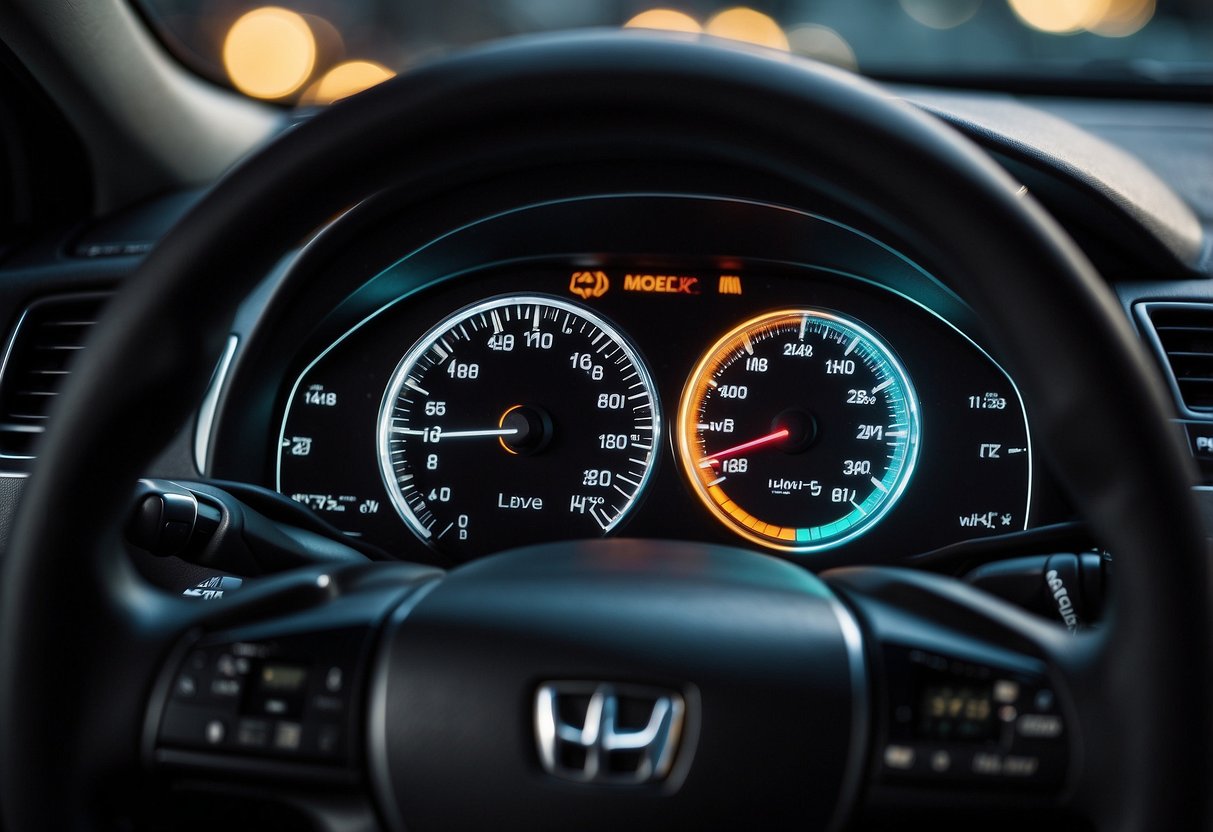
We all get lazy sometimes, waiting until the last minute to hit the gas station. Just keep in mind, consistently driving with the gas light on can strain your fuel pump, making it gush out faster than a leaking faucet! So, while squeezing out those last miles might be tempting, our Honda Accords will thank us for stopping to refuel and keeping things running smoothly.⛽
JUMP TO TOPIC
Honda Accord Gas Light: How Much Fuel Is Left?
When that pesky gas light pops on in our Honda Accord, it’s like our car is waving a tiny white flag. This little light means we have some fuel left, but how much? Let’s break it down.
Most Honda Accords have around 2.6 to 4 gallons of gas left when the fuel light comes on. That might not seem like much, but it gives us some breathing room. Think of it as a backup plan.
What’s The Mileage?
Depending on our driving habits, we can still get between 25 to 40 miles after the light turns on. Here’s a tip: Don’t push it to the limit. Filling up sooner rather than later keeps the fuel pump happy and functional.
Tank Capacity and MPG
Knowing our Accord’s tank capacity and miles per gallon (MPG) is key. For instance, a Honda Accord typically has a tank capacity of about 17 gallons. If we average around 26 MPG, we can estimate:
For Example:
- 3 gallons left » 26 MPG = Approx 78 miles 📉
- 2.6 gallons left » 26 MPG = Approx 67 miles 📉
Quick Tips
- Don’t Ignore The Warning ⚠️ – Drive straight to a gas station.
- Listen to Your Car 🛠️ – Consistently low fuel levels can harm our vehicle.
- Plan Your Trips 🚗 – Avoid risky situations by planning ahead.
Keeping aware of these details helps us avoid the dreaded situation of being stuck on an empty tank!
What To Do When The Gas Light Comes On
When the gas light comes on in our Honda Accord, it’s a signal. We need to find a gas station, drive more efficiently, and estimate how far we can go.
Finding The Nearest Gas Station
Looking for the closest gas station should be our first step. Using a smartphone app like Google Maps or Waze can help find one quickly. If we’re on the highway, exit and find a station nearby. Running out of gas on the freeway can be dangerous.
Don’t wait too long to refuel. Empty tanks can lead to fuel pump damage!
Plan ahead and know your route. Knowing where the stations are can help prevent the light from catching us off guard.
Driving Efficiently
Once the light comes on, our driving style matters. We should avoid sudden speed changes and keep a steady pace. Speeding up and slowing down rapidly uses more fuel. Sticking to the middle lanes on a highway and avoiding heavy traffic can help stretch those last gallons.
Turning off air conditioning and avoiding high speeds makes a difference. These changes may seem small but can add up, giving us those extra miles we desperately need.
Estimating The Remaining Distance
Estimating the remaining distance we can drive isn’t an exact science. Most Honda Accords have about 1-2 gallons left when the light comes on. This usually means we can drive 30-50 miles before we’re completely out.
| Driving Conditions | Approx. Miles Left |
| Highway (steady pace) | 40-50 miles |
| City (stop-and-go) | 30-40 miles |
We’ve got to consider our driving conditions. If we’re in heavy traffic or stop-and-go city driving, we might not get as far. Paying attention to these details can help us avoid getting stuck on the road.
Understanding Fuel Gauge Accuracy
Knowing how accurate the fuel gauge is on a Honda Accord can help us plan our trips better and avoid running out of gas unexpectedly. Factors like driving habits and conditions can affect the accuracy, and understanding how to reset the gauge can be crucial.
Factors Affecting Accuracy
Various elements influence the accuracy of the fuel gauge. The ECU (Engine Control Unit), which gathers data from the fuel level sensor, plays a significant role. If the sensor is dirty or faulty, it might send incorrect data.
Weather can also affect readings. In colder temperatures, fuel contracts, which might show less fuel in the tank. Conversely, in hot weather, the fuel expands, sometimes giving a false sense of having more gas.
Driving habits are another factor. Quick acceleration and heavy braking can cause the fuel to slosh around, leading to inconsistent readings.
It’s also essential to check the owner’s manual for specific details.
Resetting The Fuel Gauge
Sometimes, we may need to reset the fuel gauge to ensure it displays the correct information. The process is generally straightforward, but it might differ based on the model year. As a rule of thumb, we should park on a level surface and turn off the engine.
After that, insert the key into the ignition and turn it to the “on” position without starting the car. Hold the trip computer reset button until the fuel gauge needle moves, then release it.
Following the owner’s manual instructions for our specific model can prevent errors. This ensures the ECU and fuel level sensor recalibrate accurately.
Properly resetting the gauge helps maintain accuracy, allowing us to trust the readings and avoid surprises when driving.
Tips To Avoid Running Out Of Fuel
Keeping an eye on our gas levels and planning routes smartly can help prevent fuel-related headaches. Let’s dive into these essential strategies.
Regularly Check Fuel Levels
We should get into the habit of checking the fuel gauge every time we start the car. It’s an easy way to avoid unexpected stops at the pump. Many cars, including the Honda Accord, have a fuel warning light that usually indicates there’s 2-3 gallons left. This allows us to estimate a safe distance before refueling.
Using technology like trip computers or smartphone apps, we can monitor our fuel economy and remaining range. Routine checks can prevent the fuel pump from overheating and sediment from clogging the fuel filter. Keeping the tank above a quarter full helps the fuel pump maintain the right pressure and temperature.
Ignoring the fuel light could lead to being stranded and expensive repairs.
Plan Your Trips
Before heading out, let’s check our routes and distances. Knowing how far we’ll go helps us decide when to refuel. For longer trips, it’s smart to mark fuel stops along the way. Apps like Google Maps can be helpful in locating nearby gas stations.
By planning, we avoid running out of fuel and save money by choosing stations with better prices. We should also consider fuel stops during ongoing maintenance. This keeps the car running smoothly and prevents damage to internal components due to low fuel, ensuring the ride remains comfortable.
To wrap it up, regular fuel checks and route planning are crucial to keep us and our Honda Accord running efficiently without unnecessary troubles.

We love what we do, and it shows in everything we do and more. We share our knowledge, here on Ran When Parked.
- Car Jerks When Accelerating Slowly – Causes and Fixes - January 8, 2026
- Check Engine Light On but Car Runs Fine – Causes Explained - January 4, 2026
- Car Shakes When Idling but Drives Fine – Causes & Fixes 2026 - January 4, 2026