
When you purchase a new car, one of the biggest concerns you might have is maintaining its pristine appearance.
The importance of protecting the paintwork on your new vehicle cannot be overstated.
Car paint protection plays a pivotal role in vehicle maintenance, safeguarding the aesthetics and structural integrity of the exterior.
Over time, the paint on cars can suffer from exposure to elements like UV rays, bird droppings, and road debris, which can lead to fading, discoloration, and in some cases, corrosion.
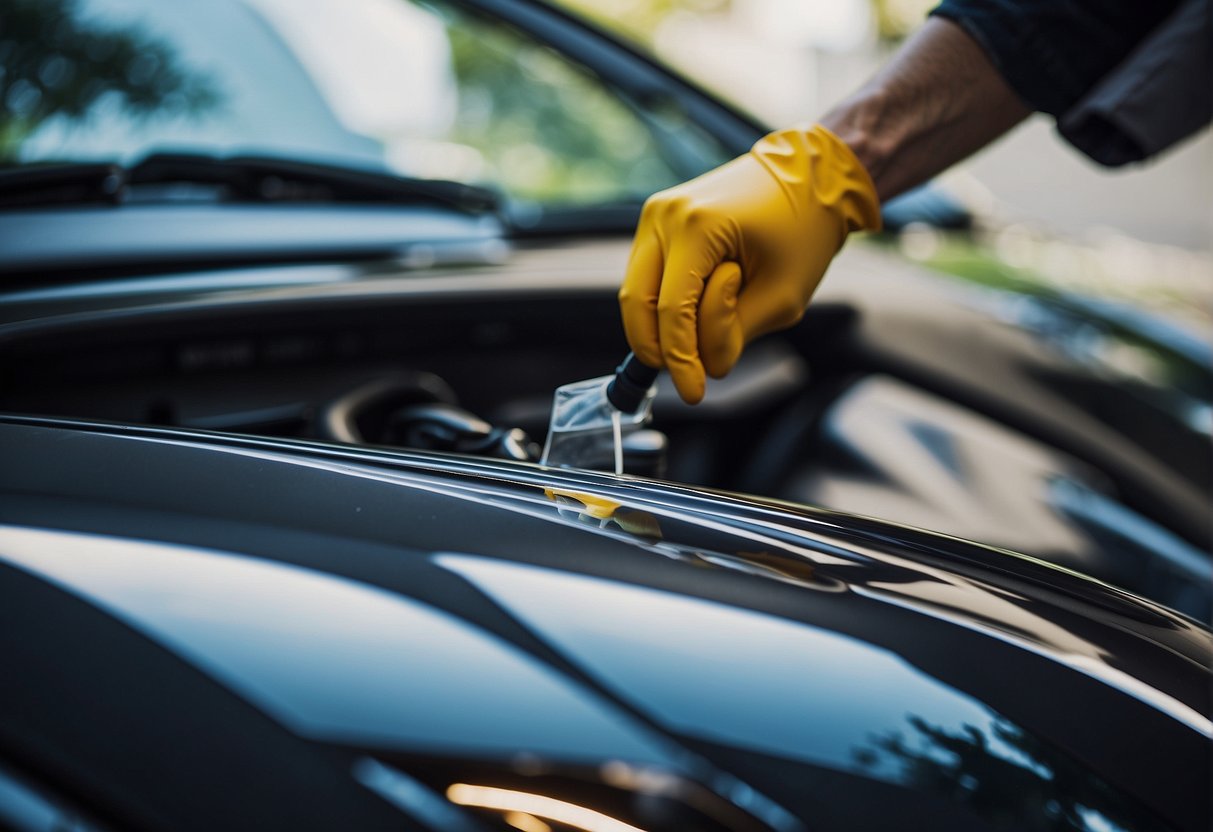
Investing in car paint protection shortly after purchasing a new car is a wise choice.
This process involves applying a clear layer over the paint, which acts as a barrier against various forms of damage.
Not only does this preservative shield maintain the gloss and color of the paint, but it also enhances the vehicle’s overall longevity and can even improve its resale value.
There are several methods we can consider for this purpose, including the use of sealants, waxes, and protective films—each offering different levels of durability and protection.
Let’s break down the different options available.
Sealants provide a synthetic barrier that can last months and is relatively easy to apply.
Quality waxes deliver a rich shine and can protect against UV rays, but may require more frequent application.
Perhaps the most durable solution is a paint protection film, which offers a thick, flexible barrier and is capable of self-healing small scratches.
Choosing the right protection depends on our desired level of durability, the environmental conditions our car will face, and how much maintenance we’re willing to perform.
JUMP TO TOPIC
Maximizing Durability and Protection
To enhance the longevity of your car’s aesthetic, employing methods to shield its paint against various damaging factors is crucial.
We’ll explore the essential role of sealants and waxes, the advantages of ceramic coatings, and how paint protection film can safeguard against physical threats.
Understanding the Role of Sealants and Waxes
Formulated from synthetic polymers, they bond to the paint’s surface, creating a hard, long-lasting layer.
Application of a sealant can last several months, making it a reliable choice for paint protection.
Waxes, traditionally derived from natural carnauba, deliver a rich gloss while also providing a defensive coating. However, waxes usually hold up for a shorter period and may require frequent reapplications to maintain optimal protection.
Benefits of Ceramic Coatings
are at the forefront when we consider advanced paint protection.
Infused with nanoparticles, these coatings create a chemical bond with the paint, offering a semi-permanent, hydrophobic layer that is resistant to chemicals, heat, and oxidation.
Boasting impressive durability, ceramic coatings not only preserve the paint’s integrity but also simplify cleaning and maintenance.
Paint Protection Film for Defending Against Physical Damage
Paint protection film, often made from polyurethane, is designed to shield the paint from physical harm such as stone chips, scratches, and abrasions.
This clear film is especially beneficial for high-impact areas of your vehicle.
When we consider whether paint protection is worth it, this film’s self-healing properties that allow light scratches to disappear with heat application are a testament to its effectiveness.
| Protection Method | Type | Duration |
| Sealants | Synthetic | Several months |
| Waxes | Natural/Synthetic | Few weeks to months |
| Ceramic Coatings | Semi-Permanent Nano-Coating | Several years |
| Paint Protection Film | Polyurethane | Years, with maintenance |
The Importance of Regular Maintenance
Maintaining the paint job of your car is crucial. It not only ensures the vehicle looks its best, but it also protects it from various types of damage.
Let’s explore how routine maintenance can be effectively performed.
Effective Cleaning and Washing Techniques
Here’s what we should do:
- Use Detailing Spray: After a wash, apply a detailing spray to remove water spots and give a glossy finish.
- Dry Thoroughly: Use a microfiber cloth to prevent watermarks and scratches.
- Regular Washes: Washing our car every two weeks prevents dirt from bonding with the paint, which could lead to damage.
Dealing with Scratches and Stone Chips
- Inspect Regularly: It’s imperative that we inspect our car routinely for any new scratches or stone chips.
- Paint Correction: Small blemishes may be remedied with a DIY paint correction kit; deeper ones necessitate a professional’s touch.
Professional Detailing for Optimal Care
- Advanced Techniques: They utilize advanced polishing techniques and high-grade waxes or sealants for protection.
- Periodic Detailing: Aim for professional detailing at least twice a year to ensure your car’s paint job remains in excellent condition and to remedy any unnoticed damage.
Choosing Quality Paint Protection Products
When safeguarding your vehicle’s finish, the choice of car paint protection products is crucial. Our selection will determine the longevity and efficacy of the protection.
Comparing Different Types of Car Paint Protections
- Spray Wax: Quick and easy, ideal for regular maintenance.
- Liquid Wax: Longer-lasting than spray, provides a glossy finish.
- Ceramic Spray Coating: Offers a robust barrier against various elements.
Spray waxes offer convenience and are suitable for frequent use to maintain gloss.
However, we find that liquid waxes tend to provide a more durable layer, with added depth to your vehicle’s shine.
For enthusiasts seeking the ultimate shield, ceramic spray coatings are worth considering due to their advanced formulas delivering a harder, more protective surface layer against contaminants and minor abrasions.
Investing in the Right Protection for Your Vehicle
| Product Type | Expected Durability | Estimated Investment |
| Spray Wax | Short-Term | Low |
| Liquid Wax | Medium-Term | Moderate |
| Ceramic Spray Coating | Long-Term | Higher |
DIY Tips for Paint Protection Application
Protecting your car’s paint not only preserves its appearance but also maintains its value over time.
Applying a protective layer yourself can be both cost-effective and satisfying.
Step-by-Step Guide to Applying Sealant
We begin by thoroughly cleaning our car’s surface. Any dirt or residue will hinder the adhesion and effectiveness of the sealant.
Next, we apply the sealant evenly over the bodywork using a soft foam applicator or microfiber cloth.
It’s crucial to follow the product’s specific instructions for the best results.
Some sealants are very easy to apply, with a simple wipe-on, wipe-off method.
We ensure a thin, even layer is spread, and we give it time to bond with the paint before buffing off any excess.
This process might require multiple coats for optimal protection.
Consistency is key; we must remember to cover all exterior painted surfaces, including harder-to-reach areas.
Maintaining the Protective Layer Over Time
Instead, we opt for pH-neutral car shampoos.
We often refresh the sealant layer according to the product’s longevity specifications, which can range from a few months to a year. Periodic applications ensure the longevity of the protective benefits.
Moreover, some advanced sealants offer self-healing properties that can minimize the appearance of light scratches.
If we notice any degradation in water-beading or the paint’s glossiness, it’s a signal for us to reapply the sealant. Keeping the protective layer intact ensures our car’s paint stays resilient against the elements and maintains that just-waxed shine.

We love what we do, and it shows in everything we do and more. We share our knowledge, here on Ran When Parked.
- Car Jerks When Accelerating Slowly – Causes and Fixes - January 8, 2026
- Check Engine Light On but Car Runs Fine – Causes Explained - January 4, 2026
- Car Shakes When Idling but Drives Fine – Causes & Fixes 2026 - January 4, 2026